
Reverse Coloring Books: How They Work and How to Start
reverse coloring book: search-intent guide for adults and creative beginners, with page-selection criteria, print setup, supply notes, and product-fit.
A reverse coloring book flips the usual order. Instead of black outlines waiting for color, each page starts with soft patches of color, often in a watercolor style, and you add the lines yourself. The page becomes a prompt: you look at the shapes, decide what they could be, and draw on top. Coloring Nest does not sell a reverse coloring book; its books are traditional line art. This guide explains how the format works, what you need, and how to make your own pages if you want to try it.
Quick answer
Reverse coloring gives you the color first and asks you to add the lines. You need a page of color washes, from a reverse book or painted yourself, and a fine black pen. It suits people who enjoy doodling but do not want to start from a blank page.
How reverse coloring works
In a standard coloring book, the lines tell you where color goes. In a reverse book the color is already placed, and your pen decides what it becomes. A blue patch might turn into a fish, a cloud or a field of patterned scales. There is no correct answer, which is the main appeal and, for some people, the main drawback.
- Outline the largest color shapes first, then add details inside them.
- Patterns such as dots, stripes, scallops and leaves fill a shape without needing a subject.
- Leave some areas open. White space and untouched color are part of the look.
- If no picture comes to mind, treat the page as abstract and add pattern only.
Who it suits
Reverse coloring tends to suit adults and older children who like to draw but freeze in front of blank paper. The color fields remove the blank-page problem while still leaving room for personal marks. It suits people less well if they want clear boundaries and a finished image they can predict, or a quiet session with no decisions to make. For that, a traditional line-art page is the better choice.
Reverse and traditional coloring compared
- Order: traditional pages give you lines and you add color; reverse pages give you color and you add lines.
- Tools: traditional pages work with crayons, pencils or markers; reverse pages need a pen that shows up on top of color.
- Decisions: a traditional page asks which colors to use; a reverse page asks what the shapes should become.
- Result: a traditional page ends as the picture the artist drew; a reverse page ends as something only you would draw.
Pens and paper
- A black fineliner is the usual tool. Pigment-ink pens give crisp, dark lines over most color.
- A white gel pen adds highlights on darker patches.
- Colored and metallic gel pens add accents once the outlines are in.
- Test any pen in a corner first. Some pens smudge or skip on glossy or heavily inked areas.
- Let painted or freshly printed pages dry completely before drawing on them.
Making your own reverse pages
Because the format is mostly color, you can make pages at home without a special book.
- Paint loose watercolor shapes on watercolor paper and let them dry flat. It handles water with less buckling than printer paper.
- Lay down a few overlapping blobs with water-based markers or watercolor pencils, then soften them with a damp brush.
- Make a digital wash in a drawing app and print it. Large color areas use a lot of ink, so print one test sheet and check that the paper does not curl.
- Keep the shapes varied. A page with three or four distinct color areas gives more ideas than a single flat wash.
If you go the printed route, the how-to-print guide covers paper choice and printer settings.
A first session, step by step
- Pick a page with a few clear color areas and look at it for a minute before drawing.
- Outline one shape that suggests something, even loosely.
- Outline the neighboring shapes so the picture connects.
- Add pattern and small marks inside the shapes.
- Stop before every space is filled.
If you prefer lines first
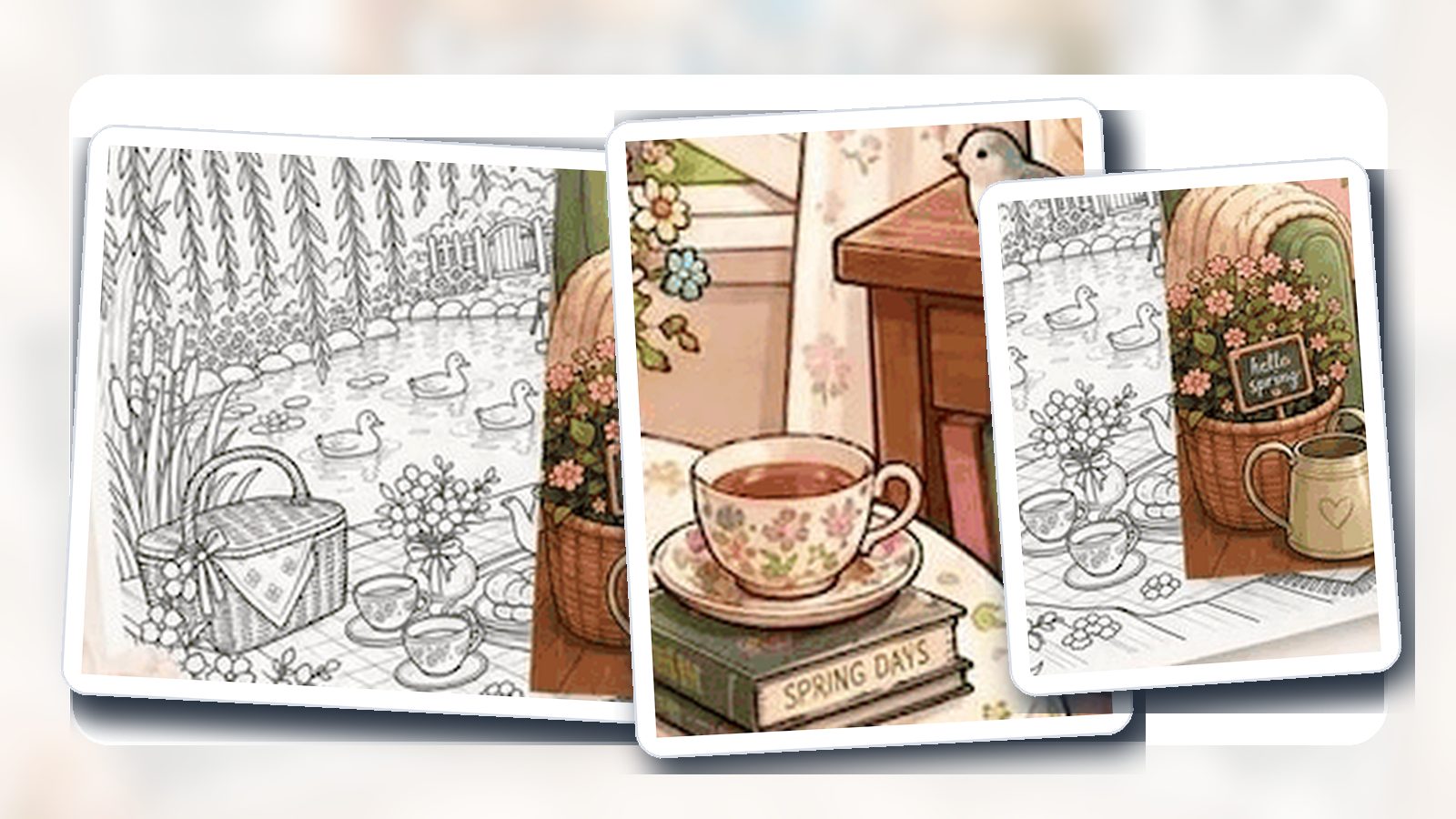
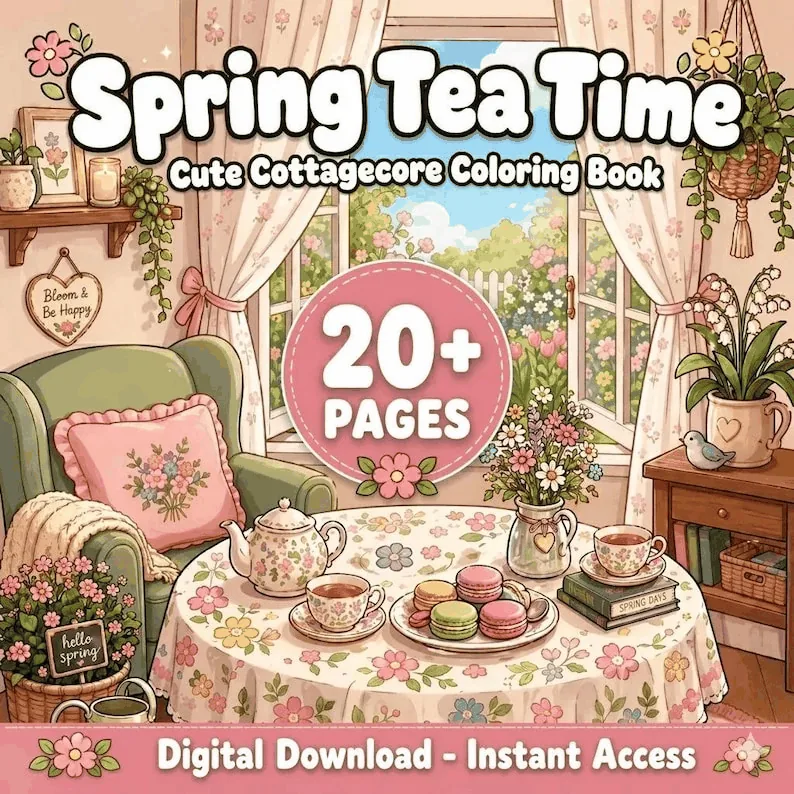
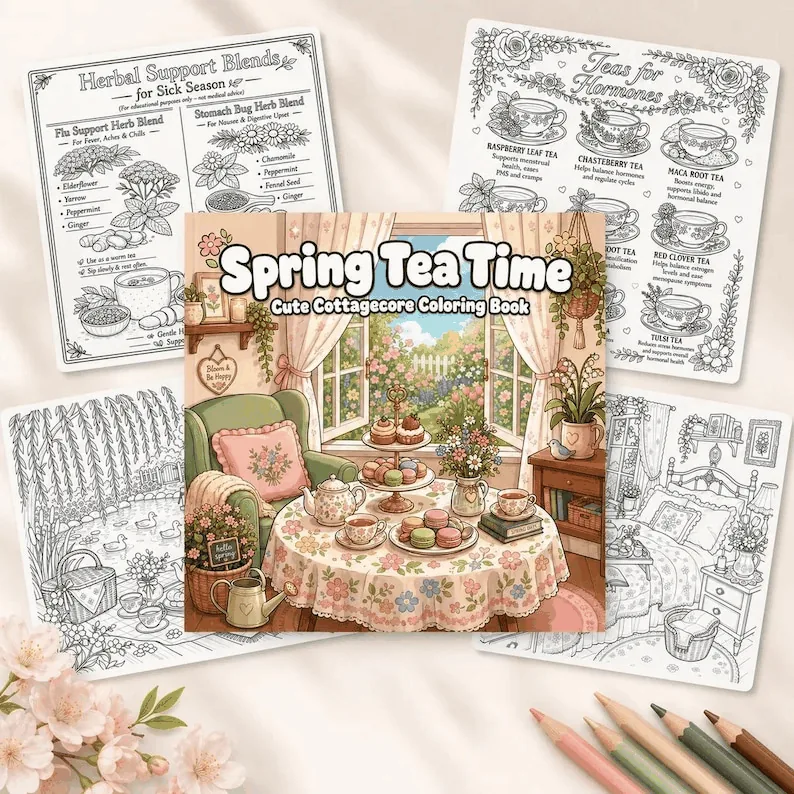
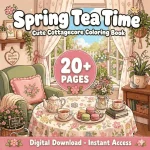
Coloring Nest books are the opposite experience: the drawing is done and the color is yours. The book pictured above, the Spring Tea Time Cottagecore Coloring Book, has floral tea-time pages with cottagecore tables, treats, books and flowers. Every book has five free sample pages on its product page, and the free coloring pages hub gathers samples in one place, so you can try a traditional page alongside your reverse experiments.
Reverse coloring FAQ
Is reverse coloring good for beginners?
Yes, especially for people who enjoy doodling. The color gives a starting point, and there is no wrong way to finish a page.
Can I turn a printable line-art page into a reverse page?
Not directly, because the lines are already there. You can paint or print color washes on blank paper and draw over them instead, which is the same idea.
What pen works best for reverse coloring?
A black fineliner for outlines, plus a white gel pen for highlights on darker color. Test both in a corner of the page first.
Twelve free printable coloring pages
Two pages from each of six books, free and with no email required. Download the free pages.
Email me when a new Coloring Nest book is released. Nothing else.
Related printable sets
Related guides
Printable PDFs