
Turn a Mediterranean Coloring Page Into a Personal Travel-Journal Insert
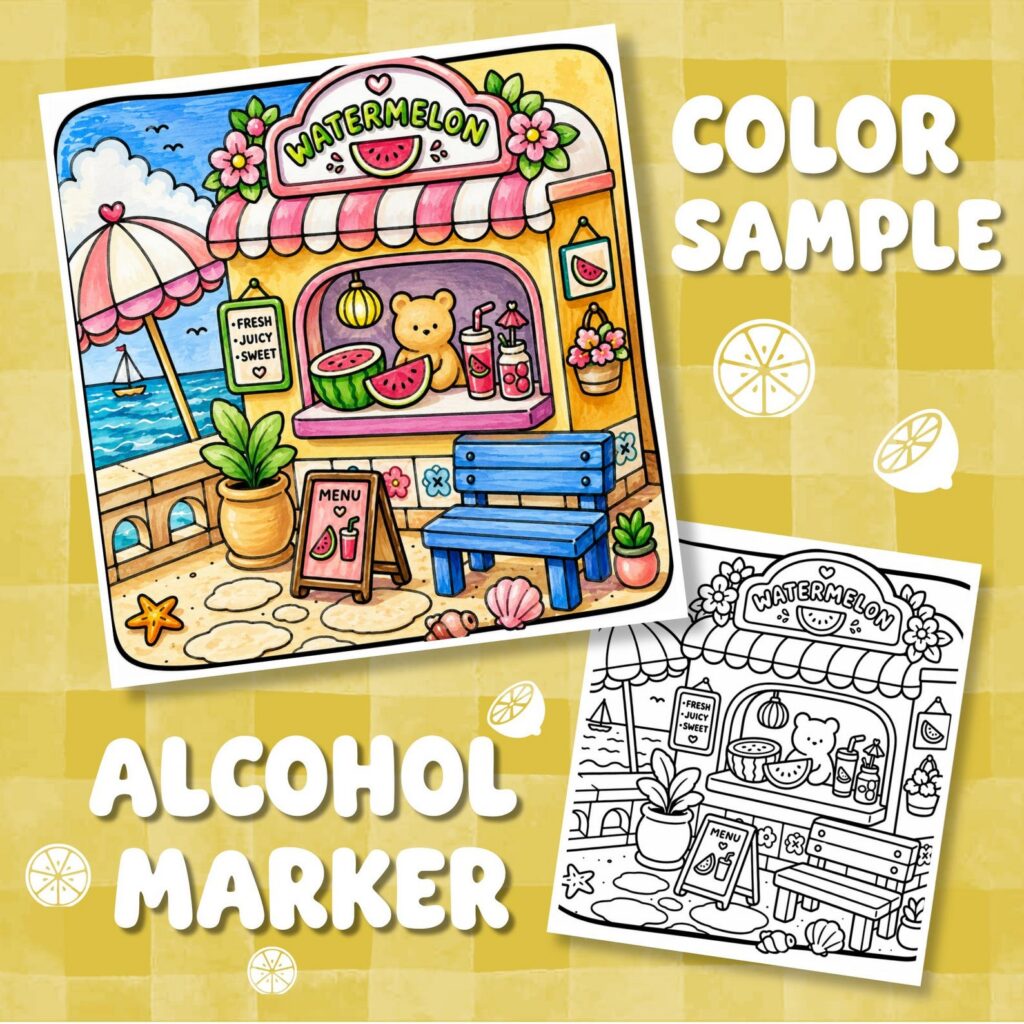
Pair one Mediterranean coloring page with a short note. Choose one visible detail to connect them, repeat its color or shape on the note, and write the memory, mood, or imagined moment behind the scene. Plan both pieces before coloring so every choice has a job.
Keep this as one artwork-and-note entry for your own journal. The page supplies the atmosphere; your words supply the personal meaning.
Begin with the story the page will carry
Choose the entry before choosing colors: a summer memory, a place you would like to see, an imagined afternoon, or the reason the scene caught your attention. Write one working line on scrap paper, such as “warm walls after a quiet day.” It sets a direction without becoming the finished note.
If the artwork is undecided, use our summer coloring book guide to find a warm-weather subject that matches that direction. Let the shapes on the selected page guide the entry.
For this project, a medium-detail travel scene from Cozy Mediterranean Summer Coloring Book gives you architecture or a decorative object to echo between the artwork and note; Get it on Etsy.
Open the journal where the insert will live and set the artwork nearby. Decide whether the note will sit on the facing leaf, tuck behind the page, or share a pocket with it. This choice makes the note a companion panel, a small discovery, or a label visible at once.
Choose one anchor in the drawing: an architectural shape, a repeated curve, or a decorative object. Pick something recognizable but small enough not to dominate. Pair its name with a feeling beside your working line, such as “window—welcome” or “round shape—ease.”
Shape the artwork and note as one composition
Place a blank note card or clean journal leaf beside the page. Identify three visual stops: the artwork’s focal area, the anchor that will bridge the pieces, and the future note heading. Arrange them so the eye crosses the entry rather than gathering in one corner.
Give the note quiet space for handwriting. Busy artwork calls for a plain card and one small echo; a more open page can support a wider heading rule or simple corner motif. Keep the echo recognizable without making it a second illustration.
Repeat the anchor one way: borrow its outline for a tiny border mark, carry its color into the heading, or use its name in the first line. One clear echo is enough.
Sketch the note layout lightly: heading near the top, a few sentences in the center, and an optional date or palette name at the bottom. Set it beside the page and keep the shared cue visible.
Keep the working line centered on a feeling, memory, or creative choice. Those words give the finished note a voice instead of turning it into a label for the picture.
Color toward the shared anchor
Build the page around the anchor rather than trying to give every object a separate color. Choose a leading color family for the larger shapes, a quieter support color that can repeat, one small accent, and light and dark neutrals. When you want a clearer way to relate those hues, our guide to complementary versus analogous coloring-page palettes helps you choose between close color neighbors and a more distinct opposite accent.
Start with the broad groups so you can see the balance of the page. Let neighboring areas share related colors where you want a calm field, and save the strongest light-dark difference for the main point of attention. The anchor can take the accent, but it can also stay quieter and connect the composition through repetition. Its job is to bridge the page and note, not automatically to become the loudest object.
Move next to repeated shapes and smaller decoration. Let most of them borrow colors already in the page so the anchor remains easy to find. When two touching areas merge visually, change the value of one before adding another hue. A lighter support color beside a deeper leading color can separate the shapes while keeping the palette focused.
Set the unfinished note beside the artwork from time to time. Look at the pair from normal journal-reading distance and notice whether the eye can travel from the main artwork area to the anchor and then toward the note heading. If another detail pulls harder, soften that detail or reduce how often its color repeats. If the anchor disappears, deepen or lighten it against its immediate neighbor.
When the page feels settled, place a small echo of the anchor color or shape on the note. A short heading rule, one colored initial, or a corner mark is enough. Leave most of the card open so the handwriting, rather than extra decoration, carries the personal part of the entry.
Write the note and place the finished pair
Write the note while the colored page is beside you. Begin with why you chose the scene today. Add one sentence about the memory, hope, or imagined moment behind it, then name one coloring decision you want to remember. This creates a compact entry with a reason, a personal detail, and a creative detail.
Use concrete words from your own experience or imagination. A season, a kind of weather, a shared meal, a person, or a mood can make the note specific without turning it into a travel report. Let the artwork show what is visible. The note is more useful when it says why the scene belongs in this journal or what the chosen colors mean to you.
Read the note beside the page and remove any sentence that simply inventories the drawing. Keep the line that sounds most like you. Give the heading breathing room, place an optional date or palette name quietly at the bottom, and repeat the anchor only once on the card.
If you want a separate image record, follow our guide to photographing a finished coloring page in natural light before placing the pieces. If the artwork later moves into a loose-page collection, our personal portfolio guide gives it an organized home.
Lay the artwork and note in the journal while they are still loose. Align the card with a page edge or margin, and keep the anchor visible. Tuck or attach the artwork first, then position the note so neither piece covers the other’s focal area. The eye should meet the colored scene, find the repeated cue, and arrive at your words. Close the journal with the artwork and note assembled as one personal insert.
Twelve free printable coloring pages
Two pages from each of six books, free and with no email required. Download the free pages.
Email me when a new Coloring Nest book is released. Nothing else.
Printable PDFs