
How to Add Cast Shadows Without Covering Printable Line Art
Add cast shadows without covering printable line art by planning each shadow in the open space beside its caster. Choose one light direction, begin where the object meets a surface, and place the deepest value at that contact. As the shape travels away, lighten it, shorten it, or divide it around printed details. Keep each shadow selective and let every printed line stay visible.
We pair the page-and-palette ideas in our adult coloring book guide with one simple restraint: give shadows to the focal object and a few supporting forms, not every item on the page.
Pick a Caster With Room Beside It
First, separate shading from a cast shadow. Shading sits on an object; a cast shadow begins at the object and stretches across a nearby surface. Look for a clear contact point and enough open space for a distinct shape.
Choose the main caster before reaching for a color. A character standing on the ground, a cup resting on a table, or a pot sitting on a sill gives you an obvious starting edge. A floating detail with no visible support is harder to anchor, so leave it out of the first shadow group.
On a crowded interior, the object order in creating depth in cozy interior coloring pages makes a useful filter. Give the most noticeable cast shadow to a form that already matters in that arrangement. Supporting forms can take a narrow contact shadow, while small background details can remain open.
Set the Light Direction From the Contact Point
Mark a light source at the upper left on scrap paper. Plan the selected shadows to extend toward the lower right, away from that source. Keep them moving in the same general direction.
Now find the contact point. On a rounded object, it may be the small section touching the surface. On a boxy object, it may be part of the bottom edge. Start the shadow against that point instead of leaving a bright gap, then aim its other end away from the marked light source.
Mark the planned endpoint lightly before filling anything. These two anchors—contact and endpoint—show whether the route has enough clear space. If the straight route runs immediately into dense printed detail, choose a shorter endpoint while the shape is still easy to change.
Shape the Shadow to Fit the Open Space
Use the caster’s silhouette as a clue, not a tracing template. A round form can lead to an oval or tapered shadow. A boxy form can lead to an angled block. A character shadow can join the largest body and foot shapes instead of copying every ear, paw, or strand.
Look along the planned route and notice where the open area widens or narrows. Let the shadow respond to that space while keeping its overall direction. It can widen just beyond the contact point, taper before a busy cluster, or end early beside an important outline. This is more useful than forcing a full miniature copy of the caster into a crowded area.
Sketch the outer edge with a light touch, then view the shape as a single patch. If it feels too complicated before color is added, remove a bump or shorten the end. A simple silhouette leaves more attention for the printed drawing.
Break the Shadow Where Printed Details Begin
When the route reaches an unrelated outline, stop just before it and leave a slim open buffer. Resume on the other side only when the next open area continues the same direction. Matching the angle, width, and value across that break helps the pieces belong to one shadow without coloring over the line between them.
Shorten your strokes as you approach small details. Turn the page if a new hand position gives you a cleaner path, and complete one open segment before starting the next. Around a tight cluster, let the shadow taper away instead of weaving through every gap.
Do not add a dark border to reconnect separated pieces. That border creates a second line beside the printed one and can make the interruption more noticeable. Direction and value can carry the connection; the original outline keeps its own space.
Keep the Near Edge Strong and the Far Edge Quiet
Choose a shadow color that relates to the surface. A darker, quieter version of the nearby floor, table, sand, or wall color often sits more naturally than automatic black. Apply the color most firmly in the small contact area, then reduce the value or leave more open texture toward the far edge.
Treat edge, value, and length as separate choices. Define the contact edge first. Next, build enough value for the shape to remain distinct from its surface. Only then decide how far it should travel. If a longer shadow would cross several outlines, keep the value plan and shorten the length.
For a gradual far edge with pencils, use the controlled light-layer method in our guide to blending colored pencils on printable coloring pages. Keep that softening inside the planned shadow shape, and stop the layer before any printed boundary.
Try the Method on Two Page Styles
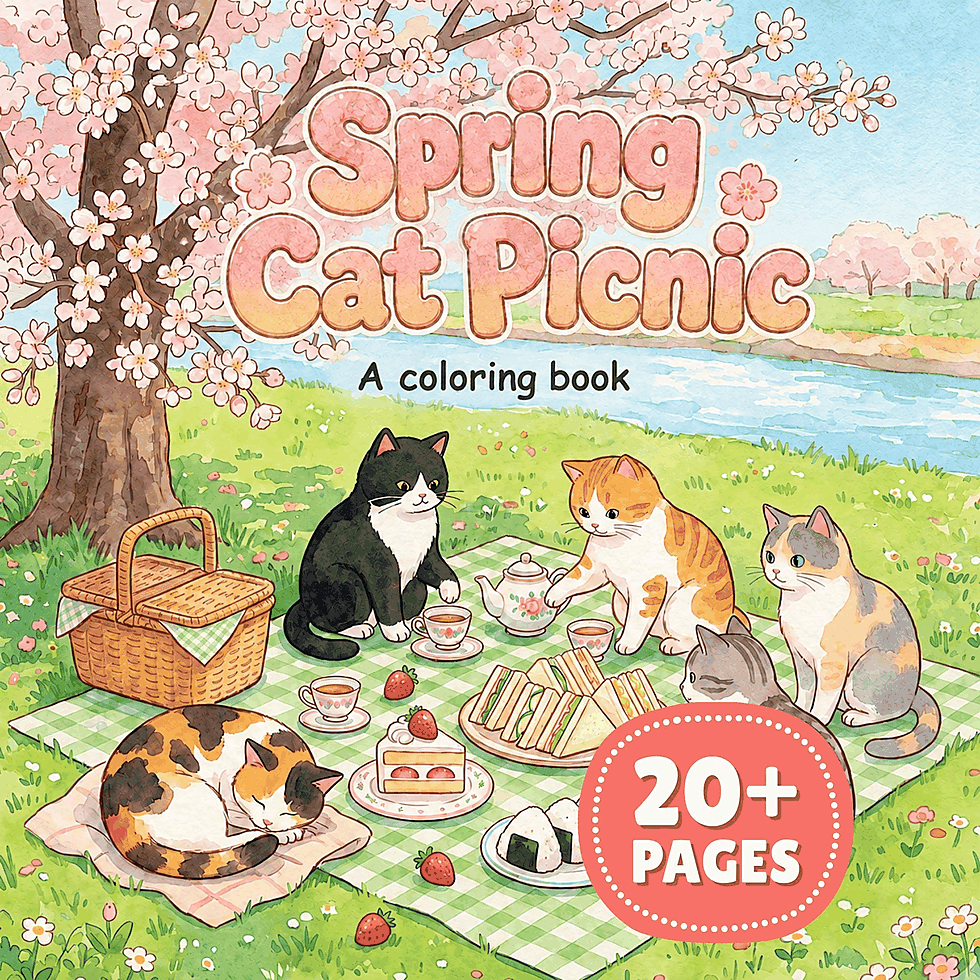
The bold cat characters and medium-detail architecture in Printable Japanese Spring Cat Picnic Coloring Book invite two different shadow decisions. Give one selected character a simple cast shadow, then shorten or segment it wherever the architectural line work narrows the open route. Get it on Etsy.
Cozy Summer Beach Adventure Coloring Book mixes simple character poses with busier adventure backgrounds. A selected simple pose can take one open shadow shape when space allows; among closer background outlines, use a compact contact shadow or a few aligned segments. Get it on Etsy.
In either style, make the decision from the visible contact point and available route. The subject tells you what casts the shadow, while the open line art tells you how much of that shadow to include.
A Cast-Shadow Selection Checklist
Before coloring a proposed shadow, ask:
- Caster: Is this one of the few forms that deserves emphasis?
- Contact: Can the shadow begin directly beside a visible support point?
- Direction: Does its route point away from the marked light source?
- Room: Is there open space for a simple silhouette?
- Lines: Can every printed detail stay visible, with breaks where needed?
- Edge: Can the contact stay stronger than the far end?
If the route fails the room or line question, shorten the shadow or choose another caster.
Twelve free printable coloring pages
Two pages from each of six books, free and with no email required. Download the free pages.
Email me when a new Coloring Nest book is released. Nothing else.
Printable PDFs